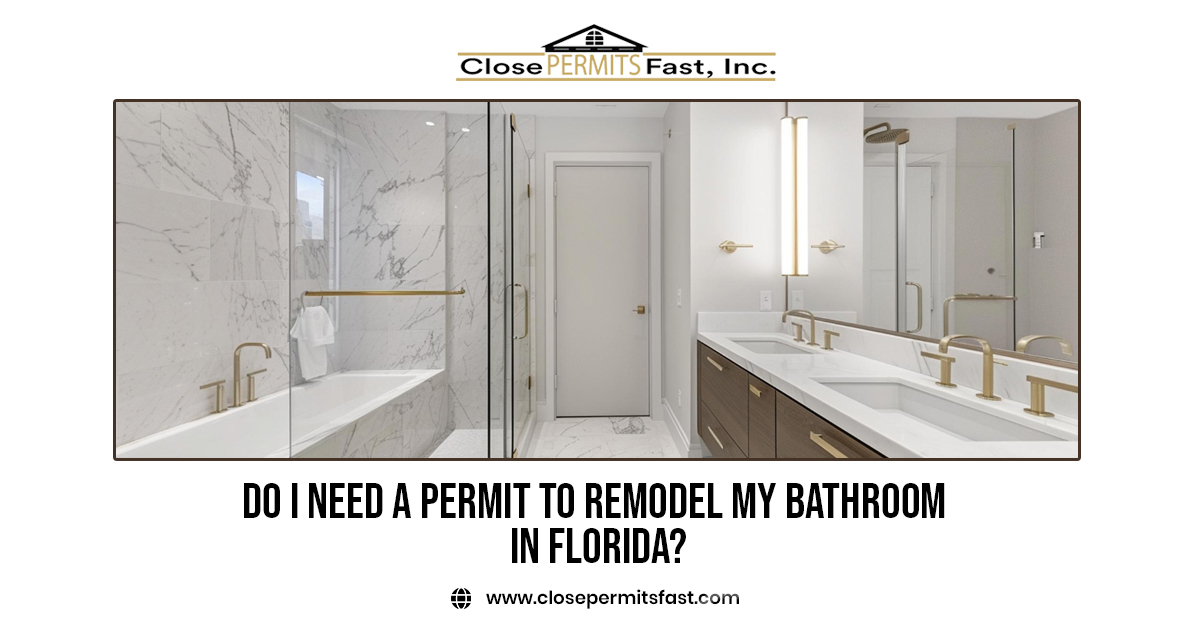
Planning a bathroom remodel in Florida? Before choosing new tile, a vanity, or a walk-in shower, it’s important to know whether your project requires a permit. A cosmetic update may be simple, but changes involving plumbing, electrical systems, walls, or other building components can involve additional requirements.
So, do you need a permit to remodel a bathroom in Florida? It depends on the work you’re planning. Understanding the scope of your renovation before construction starts can help you avoid unexpected inspections, delays, and compliance problems.
When Does a Bathroom Remodel Require a Permit?
The biggest factor is what you’re changing.
A bathroom renovation may require permitting when it involves:
- Plumbing modifications
- Electrical work
- Structural changes
- Removing or relocating walls
- Changing ventilation systems
- Moving bathroom fixtures
- Other regulated construction work
For example, replacing a vanity in the same location can be very different from moving the vanity and changing its plumbing connections.
If your project involves multiple types of construction work, it’s better to determine the requirements before demolition begins.
Which Bathroom Updates May Not Need a Permit?
Some cosmetic improvements may not require a permit, depending on the project and local jurisdiction.
These may include certain:
- Painting
- Flooring replacement
- Cabinet updates
- Countertop replacement
- Minor cosmetic improvements
However, homeowners shouldn’t assume that every bathroom renovation is exempt.
Once you start changing plumbing, electrical, structural, or other regulated systems, different requirements may apply. When you’re unsure, check with the appropriate building authority before starting work.
Does Bathroom Plumbing Require a Permit?
Plumbing is one of the most important areas to consider during a bathroom renovation.
You may need to determine permit requirements if you’re planning to:
- Move a toilet
- Relocate a shower
- Move a sink
- Change drain lines
- Modify water supply lines
- Add plumbing in a new location
A project that looks like a simple bathroom upgrade can become much more involved once plumbing locations change.
If you’re unsure about your renovation requirements, residential remodeling permit assistance can help you navigate the permitting process before construction moves forward.
Does Electrical Work Require a Permit?
Electrical changes can also affect the permitting requirements of your bathroom remodel.
For example, your project may involve:
- Adding outlets
- Moving outlets
- Installing new lighting
- Modifying wiring
- Adding electrical equipment
- Changing electrical circuits
Because bathrooms have specific safety considerations, electrical work should be treated carefully rather than assumed to be part of ordinary cosmetic remodeling.
Does Replacing a Shower Require a Permit?
It depends on the type of work.
Replacing certain finishes can be different from completely relocating or rebuilding a shower.
A shower renovation may involve additional requirements if you’re:
- Moving the shower
- Changing plumbing
- Modifying drainage
- Altering walls
- Changing electrical components
- Making structural changes
The more systems your project affects, the more important it is to confirm the applicable requirements before work begins.
What About Removing a Bathroom Wall?
Removing a wall can introduce additional considerations, especially if the wall is structural or contains plumbing or electrical systems.
Before removing or relocating a wall, determine whether it:
- Supports part of the structure
- Contains electrical wiring
- Contains plumbing
- Changes the approved layout
- Affects ventilation or other building systems
For larger remodeling projects, proper plans and documentation may also be necessary.
What Happens If You Remodel Without a Required Permit?
Starting construction without a required permit can create problems later.
Depending on the situation, homeowners may face:
- Additional costs
- Required inspections
- Corrections
- Delays
- Documentation problems
- Compliance concerns
- Issues during a future property sale
If work has already been completed without the required approval, you may need to determine what permits apply, arrange inspections, provide documentation, and address any required corrections.
That’s why checking the requirements before construction is usually the easier route.
How Can You Determine Which Permits You Need?
Start by clearly defining your project.
Ask yourself:
Are you moving plumbing?
Identify every fixture and plumbing connection that will change.
Are you changing electrical systems?
List new outlets, lighting, wiring, or equipment.
Are you removing walls?
Determine whether structural components or utilities are involved.
Are you changing ventilation?
Check whether the work affects an existing mechanical system.
Are you only changing finishes?
Cosmetic improvements may be treated differently from construction changes.
Once you’ve defined the scope, you can confirm the requirements with the applicable local building department or a permitting professional.
What Documents May Be Needed?
More involved bathroom renovations may require documentation such as:
- Project descriptions
- Floor plans
- Construction plans
- Plumbing information
- Electrical information
- Structural documents
- Contractor information
- Permit applications
The exact requirements depend on the project and jurisdiction.
Preparing the right information early can help reduce unnecessary back-and-forth during the review process.
How Can Professional Permit Assistance Help?
Some homeowners can manage straightforward projects themselves. More complicated renovations can involve multiple trades, documentation, inspections, and municipal requirements.
Construction permit services in Florida can help with the permitting process for construction and renovation projects.
If you’re dealing with an application that requires tracking, corrections, or communication with the local authority, permit expediting services in Florida can also help keep the process organized.
The goal is simple: make sure your permit process matches the actual scope of your renovation.
How Can Homeowners Avoid Bathroom Remodeling Permit Problems?
A few simple steps can make your renovation easier.
1. Define the Work Before Starting
Know exactly what you plan to change.
2. Separate Cosmetic Work From System Changes
Replacing finishes is different from changing plumbing, electrical, structural, or mechanical systems.
3. Confirm Local Requirements
Don’t rely on what a neighbor or previous homeowner did. Your project may have different requirements.
4. Prepare Documents Early
If plans or other documents are needed, prepare them before submitting your application.
5. Keep Your Permit Records
Save permits, approved plans, inspection records, and final approvals for your property records.
If you’re concerned about delays, you can also review the common reasons building permits are delayed in Florida before starting your project.
What If You Already Started the Remodel?
If you’ve already started construction and realize a permit may have been required, don’t simply continue and hope the issue disappears.
First, determine:
- What work has been completed?
- Which trades were involved?
- Were plumbing or electrical systems changed?
- Was structural work performed?
- Are inspections required?
- What documentation is available?
The solution depends on the work and local requirements. Addressing the issue early can be much easier than discovering a permit problem when you decide to sell or renovate the property again.
Final Thoughts
So, do you need a permit to remodel a bathroom in Florida? It depends on the scope of your project. Cosmetic updates may be treated differently from renovations involving plumbing, electrical, structural, mechanical, or other regulated work.
Before demolition begins, define your project and confirm the applicable requirements. If you’re dealing with a more involved renovation, residential remodeling permit assistance can help you organize the permitting process and avoid unnecessary complications.
Frequently Asked Questions
It depends on the work. Plumbing, electrical, structural, and other regulated changes may require a permit, while some cosmetic updates may not.
Moving a toilet usually involves plumbing changes, so you should confirm the permit requirements before starting the work.
Some cosmetic work may not require one, but you shouldn’t assume an entire bathroom remodel is permit-free.
You may need inspections, documentation, corrections, or other steps to bring the work into compliance.
Define the exact scope of your project and confirm the requirements with the applicable local building department or a qualified permitting professional.
Need Help With Your Florida Remodeling Permit?
Planning a bathroom remodel in Florida? Make sure your permit requirements are clear before construction begins. Close Permits Fast can help you navigate residential remodeling permits, documentation, and approvals. Explore Residential Remodeling Permit Assistance to get your project started on the right track.