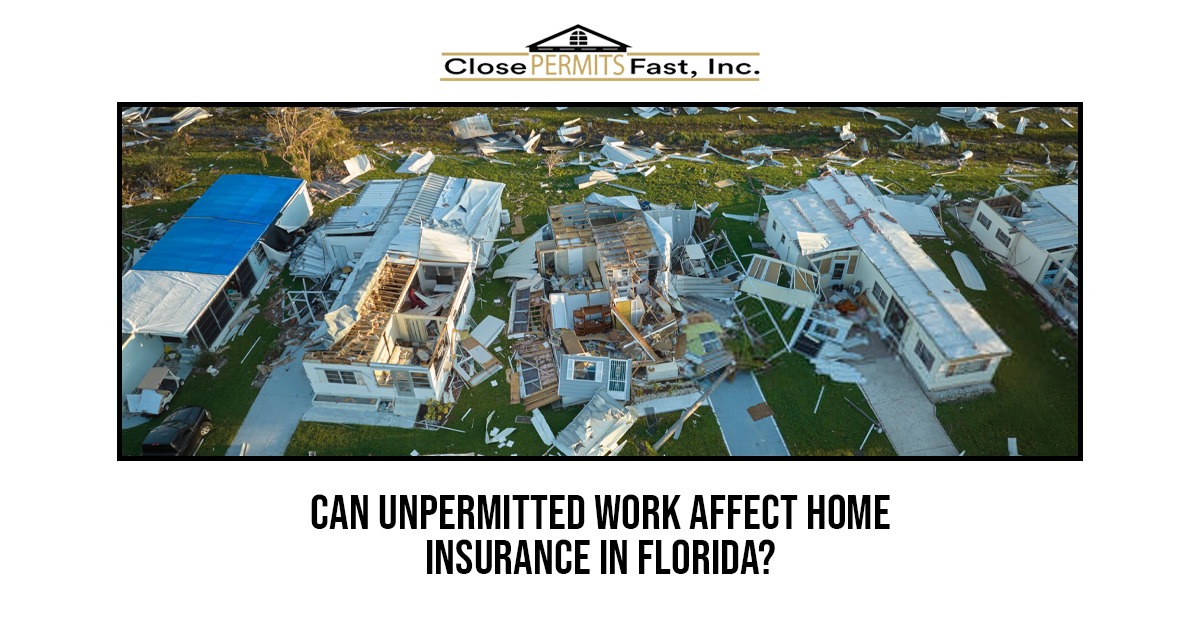
Unpermitted construction can create questions about unpermitted work and home insurance in Florida, especially when a renovation, addition, electrical upgrade, plumbing change, or structural modification was completed without the required building permit. Whether it affects coverage depends on the insurance policy, the type of work, how the issue is discovered, and the circumstances of a claim.
A missing permit does not automatically mean a homeowners insurance policy is void or that every claim will be denied. However, unpermitted work can create additional property, compliance, and underwriting concerns that homeowners should not ignore.
Does Unpermitted Work Affect Home Insurance?
It can, but there is no universal rule that every insurance company will handle unpermitted work the same way.
Insurance companies evaluate property risk based on factors such as the condition of the home and the information provided during underwriting. Unpermitted construction may become relevant because the insurer may not have complete information about how an improvement was designed, installed, or inspected.
For example, suppose a homeowner adds a room without obtaining the required permit. Years later, an electrical problem causes a fire in that area. The insurance company may investigate the cause of the loss and the property’s condition before determining whether and how the policy responds.
The policy language and facts of the claim ultimately matter.
Why Are Permits Important to Insurance Companies?
Building permits provide a formal record that certain construction or renovation work was submitted for review by the applicable authority.
Depending on the project, permits and inspections can relate to:
- Structural work
- Electrical systems
- Plumbing
- Roofing
- Additions
- Remodeling
- Mechanical systems
- Other regulated construction
A permit record does not by itself guarantee that construction is free of defects. However, it can provide useful documentation about the property’s construction history and compliance process.
When permit records do not match the actual property, questions can arise during an inspection, insurance review, sale, or future renovation.
Can an Insurance Company Deny a Claim Because of Unpermitted Work?
Not automatically.
An insurer’s response depends on the policy, the facts of the loss, applicable law, and the relationship between the unpermitted work and the claimed damage.
For instance, unpermitted remodeling may be relevant if the claim concerns a component that was improperly installed during that remodeling. That does not necessarily mean an unrelated covered loss elsewhere in the home would automatically be excluded.
Homeowners should therefore avoid relying on a simple rule such as “unpermitted work means no insurance.” The actual policy and claim circumstances need to be evaluated.
Which Types of Unpermitted Work Can Create Concerns?
Some projects can raise more questions than others because they directly affect major building systems or the property’s structure.
Structural Changes and Additions
Unpermitted additions, converted spaces, removed walls, or structural modifications may require building plans, engineering documentation, and inspections.
Because these changes can affect the physical integrity of the property, documenting them properly is particularly important.
Electrical and Plumbing Work
Unpermitted electrical or plumbing work can raise concerns about safety, installation standards, and compliance with applicable requirements.
Roofing and Exterior Changes
Roofing work and other exterior modifications can also involve permitting requirements depending on the work and jurisdiction.
The important question is not simply whether work was expensive or extensive. It is whether the work required approval and whether the existing construction can be documented and brought into compliance.
What If the Insurance Company Discovers Unpermitted Work?
The insurer may request information about the property, its condition, or the work performed.
A homeowner may need to provide available:
- Permit records
- Contractor information
- Construction documents
- Inspection records
- Receipts or project documentation
- Engineering information
- Details about renovations or additions
Do not provide inaccurate information simply because the original work was unpermitted. If you are unsure what should be disclosed to an insurer, discuss the matter with your insurance professional or attorney.
Can You Insure a House With Unpermitted Work?
Possibly. Insurance for a house with unpermitted work depends on the insurer’s underwriting requirements and the property’s specific circumstances.
An insurance company may ask questions about previous renovations, additions, property condition, or permit history when determining eligibility and policy terms.
This is different from the permitting question itself. An insurer does not replace the local building department, and an insurance policy does not legalize construction that was completed without the required approval.
If the construction needs to be brought into compliance, homeowners should address the permitting issue separately.
Should You Legalize Unpermitted Work Before Getting Insurance?
If you know that significant construction was completed without required permits, investigating the issue before it becomes part of a larger property problem can be sensible.
The process may include:
- Reviewing existing permit records.
- Identifying which work was completed without approval.
- Determining the applicable permitting requirements.
- Preparing building plans or other construction documents.
- Obtaining engineering documentation where required.
- Completing corrective work if necessary.
- Scheduling required inspections.
- Obtaining the appropriate permit approval or final documentation.
Close Permits Fast provides unpermitted work legalization services for property owners dealing with construction that needs to be brought into the permitting process.
What If the Work Was Completed Years Ago?
Older construction should not automatically be assumed to be legal simply because it has existed for a long time.
A homeowner may have inherited the issue from a previous owner or may not have known that a permit was required when the work was performed.
A useful first step is to compare the current property with available permit records. Differences can reveal additions, remodeling, or other construction that may require further review.
For a broader explanation of how unpermitted construction can be addressed, see this guide to unpermitted construction and legalization.
Can Permit Problems Affect Future Insurance or Property Transactions?
Yes, they can become relevant beyond the current insurance policy.
Permit problems may surface when a homeowner:
- Files a property claim
- Changes insurance providers
- Renovates again
- Refinances the property
- Sells the home
- Completes a property inspection
- Encounters a code violation
Resolving documentation problems can make the property’s construction history easier to understand.
Where engineering or trade documentation is needed, engineering and trade certification services may be relevant to the compliance process.
What Should Florida Homeowners Do About Unpermitted Work?
Do not wait for an insurance claim or property sale to expose an unresolved construction issue.
A practical approach is to:
- Review the home’s permit history.
- Identify additions and major renovations.
- Determine whether required permits were obtained.
- Keep available construction documents.
- Ask the appropriate local authority about outstanding requirements.
- Address known code violations.
- Consider permit legalization when appropriate.
- Speak with your insurance professional about policy-specific questions.
If the issue involves an open permit rather than completely unpermitted construction, the resolution process may be different. Closing open permits in Florida can help clarify the separate steps involved.
Protect Your Property’s Compliance
Unpermitted work does not automatically cancel homeowners insurance, but it can create uncertainty when an insurer evaluates a property or investigates a claim. The biggest mistake is assuming that insurance coverage and building-code compliance are the same thing.
Insurance addresses risks according to the policy. Permitting addresses whether regulated construction has received the required approval. Keeping both areas properly documented can reduce avoidable complications for Florida property owners.
FAQ
No. Unpermitted work does not automatically mean that a homeowners insurance policy is void. The effect depends on the policy, the circumstances, and the relationship between the construction and any insurance claim.
It is possible that unpermitted work could become relevant to a claim, but there is no blanket rule that every claim involving unpermitted construction must be denied. The policy language and specific facts matter.
If your insurer asks about renovations, additions, permits, or property condition, provide accurate information. For questions about a specific disclosure or claim, consult your insurance professional or an appropriate attorney.
Possibly. Insurance eligibility and underwriting decisions vary between companies and properties. An insurer may request additional information about the addition, its condition, and the property’s construction history.
It may provide clearer documentation about the property’s construction and compliance, but it does not guarantee that an insurance company will offer coverage or particular policy terms.
It can raise concerns because electrical work can involve safety and compliance issues. If the work is relevant to a claim or underwriting review, the insurer may request information about its installation and condition.
Start by reviewing the property’s permit records and identifying what work was completed. Then determine whether the work can be documented, inspected, corrected, or legalized through the applicable local permitting process.
Address Unpermitted Work Before It Becomes a Bigger Problem
If you have discovered unpermitted construction in your Florida property, addressing the permit issue can help establish a clearer record of the work and its compliance status. Close Permits Fast assists property owners with permit legalization, construction documentation, engineering coordination, and related permitting needs throughout Florida.